Funds for three Peer Consultations were provided in 2025 to support on-the-ground, in-person knowledge sharing among FAPs. In addition, FAPs hosted a share-out of the peer consultation activities on February 20, 2026.
Elena Calderon-Patino (Rhode Island State Council on the Arts (RISCA)), Elisha Oliver (Texas Folklife), Summer Confuorto (Massachusetts Cultural Council),and Philitha Stemplys-Cowdrey (Connecticut Museum of Culture and History)
Funding supported a weekend retreat in Providence to further discuss how the group can continue to morph their New England support system into something fieldwide, assisting both colleagues and constituents. Elena, Elisha, Summer, and Philitha visited communities around the Providence area to meet with members to get their views and opinions on the best ways institutions can provide support and form long-lasting, trusted relationships.
Elena arranged visits to community centers, museums, and cultural events with community partners in Providence. The group will take this opportunity to meet with community members in order to discuss what communities expect and would like to see from institutional partnerships and funding. Visits included the Tomaquag Museum, The Korean American Association of Rhode Island and the Cape Verdean Progressive Center.
During the retreat, the group conversed with Elisha, Executive Director of Texas Folklife, to explore the impact and success of her programming across Texas.
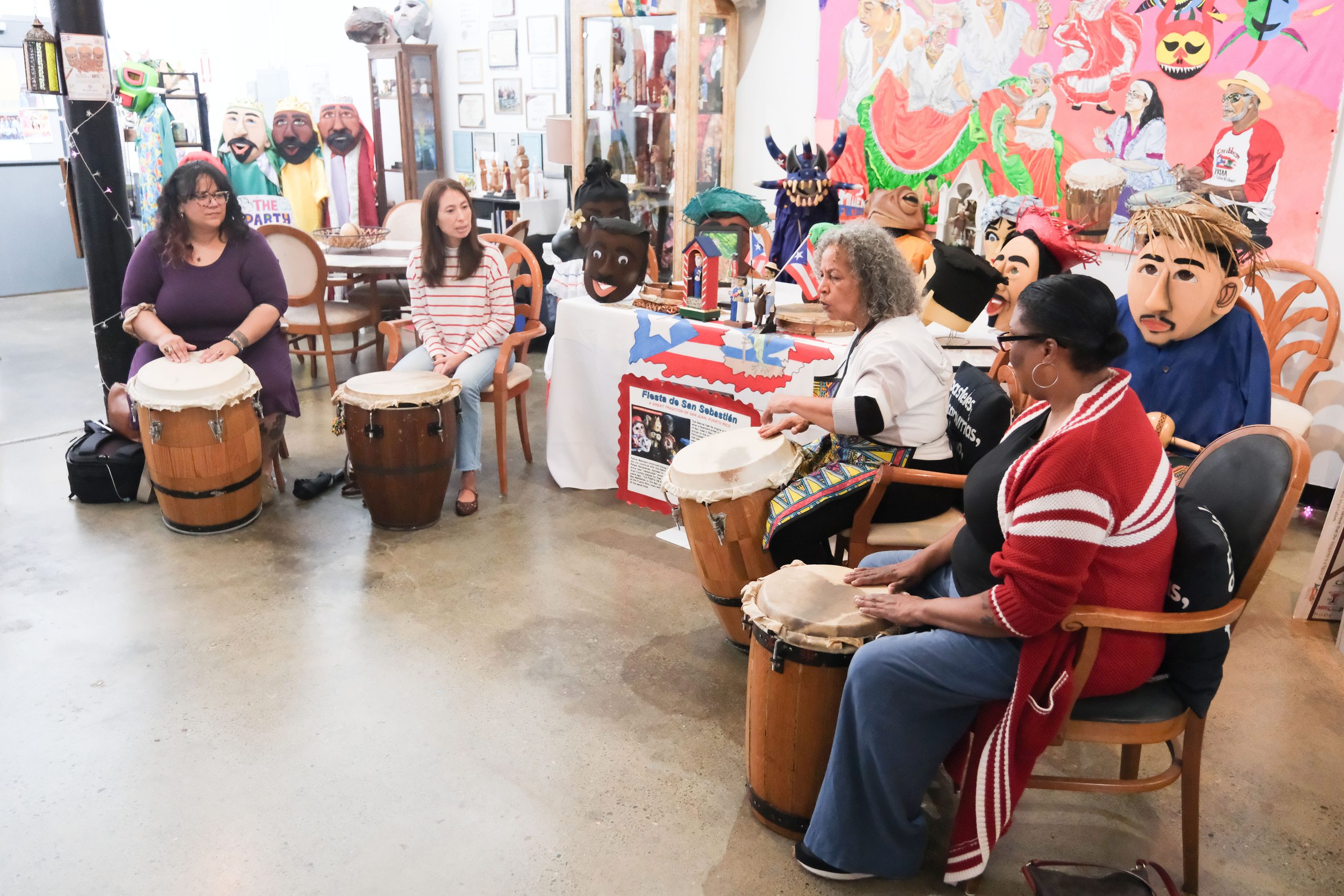
Kendell Henry (U.S. Virgin Islands Council on the Arts) and Michael Knoll (HistoryMiami Museum)
Kendell and Michael hosted each other in person at each of their institutions to develop a plan of action for establishing the first folklife archive in the U.S. Virgin Islands. Visits facilitated networking and collaboration, connecting each of them with new colleagues and organizations, building up a network of benefit to not only the proposed project, but also initiatives beyond the proposal.
Organized by Michael, Kendell’s travels to Miami will allow for first-hand learning about various aspects of HistoryMiami Museum’s work, including the workings of its folklife program, public archive and research center, and more. Kendell also met with colleagues at other Miami organizations undertaking relevant archival work. The trip informed the identification of Kendell’s needs in developing an archive and provide example models of best practices in this field.
Michael’s trip to the islands served multiple purposes. With Kendell, he surveyed the existing and potential infrastructure, including possible partners and resources, for establishing the archive. This involved site visits, meetings, and more. Michael offered a workshop on folklife documentation, archival work, and educational programming for Kendall’s colleagues in the cultural sector. Altogether, this trip helped identify how Kendell’s needs might be met and provide introductory training for his ongoing collaborators involved in public folklore-related work.
Emily Hartlerode (Oregon Folklife Network) and Micah Ling (Michigan Traditional Arts Program)
Emily Hartlerode (Oregon Folklife Network) used travel funds to bring a consultant to outline steps in one specific modality for diversifying OFN’s funding beyond federal and state grants, developing a greater operating base. Micah Ling (Michigan Traditional Arts Program) traveled to Eugene to consult on OFN’s fee-for-service possibilities, attend a pilot event, and discuss together the strengths and weaknesses of university-based public folklore organizations.
In pursuit of generating fee-based services like consultancy, and other marketplace deliverables, OFN delivered a grant-funded in-person workshop in April 2026, leveraging their folk and traditional arts expertise into curriculum for library professionals. This year, staff developed lectures, scripts, role playing activities, and small and large group exercises that support allied professionals with skills to improve their success working with cultural leaders like folk artists on OFN’s Culture Keepers Roster. This transfers OFN’s existing expertise into skills-building modules on cross-cultural communications, shifting from transactional to relational values, and investing in artist hospitality equal to visitor experience.
Micah attended a trial run of OFN’s 90-minute workshop delivered to museum colleagues at the University of Oregon, where OFN is housed. Micah learned with OFN’s position within their university context, meet key partners who can offer resources, and considered these among the strategies she recommend to OFN. Being on-site was important for Micah to accurately assess the trial workshop, meet multiple stakeholders in situ, and evaluate the diverse facilities and resources as assets available for entrepreneurship.