NEA Announces 2026 National Heritage Fellows
The National Endowment for the Arts (NEA) is pleased to announce the recipients of the 2026 NEA National Heritage Fellowships, the nation’s highest honor in the folk and traditional arts. This lifetime honor recognizes artists whose work reflects excellence, deep knowledge, and a lasting commitment to sustaining our nation’s cultural traditions.
“The 2026 National Endowment for the Arts Heritage Fellows reflect the richness of America, carrying forward cultural practices that have been passed down over generations, sharing them with others, and continuing to shape who we are as a nation.”
Mary Anne Carter (NEA chairman)
The 2026 NEA National Heritage Fellows are:
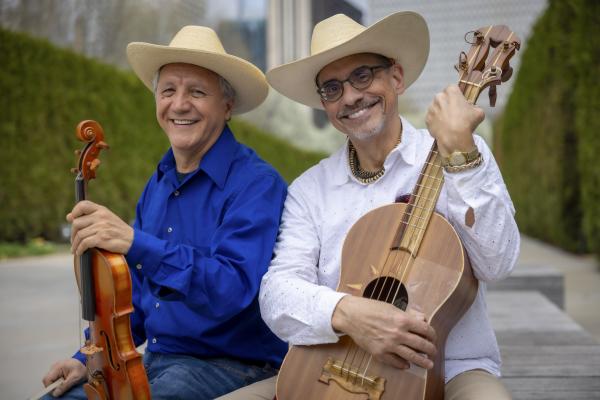
Juan Díes and Victor G. Pichardo, Mexican folk musicians (Chicago, Illinois)
Through performance, teaching, and community work, Juan Díes and Victor G. Pichardo have helped sustain Mexican son, a rich tradition of regional folk music from across Mexico. As co-founders of Sones de México Ensemble, they have brought this music to national stages while training new generations of musicians.
(Photo credit: Todd Winters)
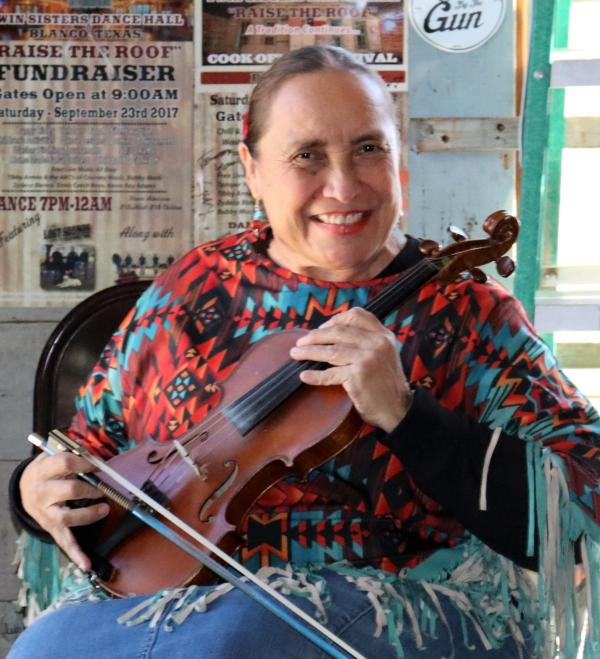
Belen Escobedo, Conjunto Tejano Fiddler (San Antonio, Texas)
Rooted in the musical traditions of the Texas–Mexico borderlands, Belen Escobedo performs early Mexican and Tejano fiddle tunes once common across South Texas. Through decades on stage and in the classroom, she has helped keep this rare style alive.
(Photo credit: Ramón Gutiérrez)
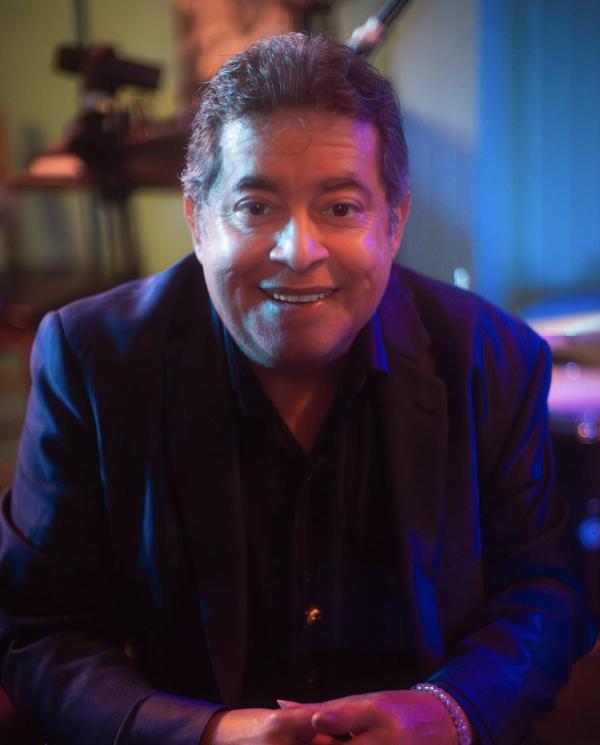
Giovanni Hidalgo, Latin Percussionist (Ocoee, Florida)
Known for his speed, precision, and expressive playing, Giovanni Hidalgo has reshaped Latin percussion on the global stage. A virtuosic performer and dedicated teacher, he continues to influence generations of musicians.
(Photo courtesy of the artist)
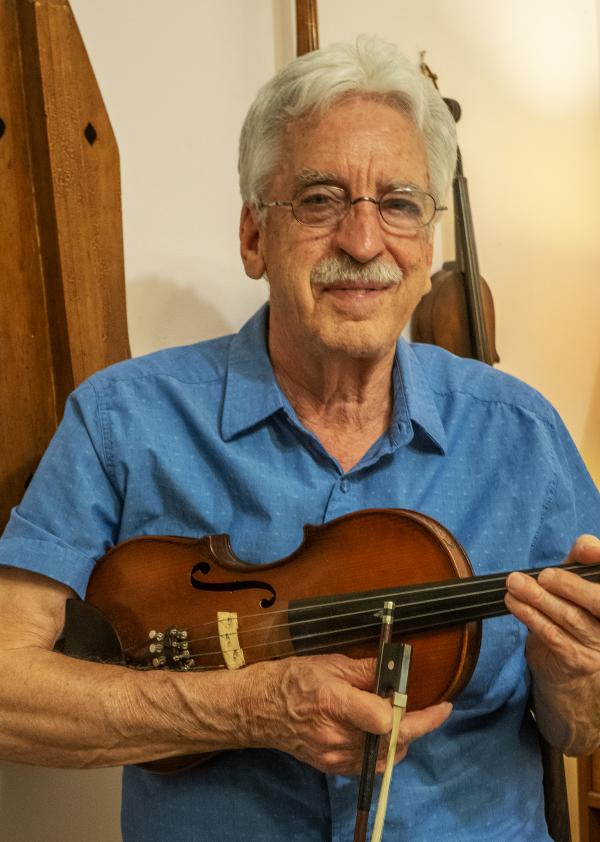
Gerry Milnes, Folklorist & Documentarian (Elkins, West Virginia)
During a career spanning more than 50 years, Gerry Milnes has documented and shared the traditions of Appalachia through recordings, films, and public programs. His work has brought lasting attention to the region’s artists and cultural practices.
(Photo credit: Mary Alice Milnes)
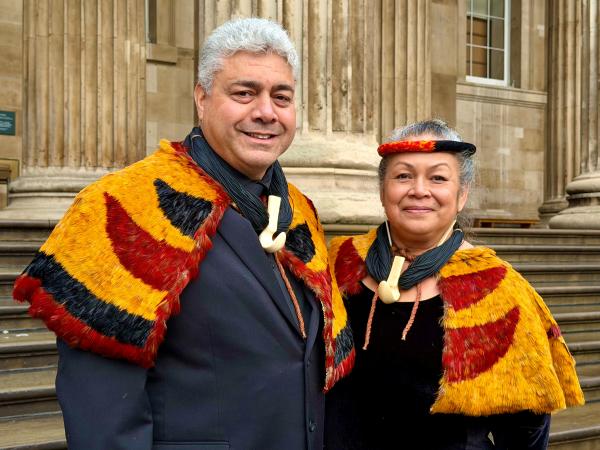
Lloyd Kumulā‘au Sing, Jr. and May Haunani Balino-Sing, Hawaiian Twined Basketry Artists (Wahiawā, Hawai‘i)
Through decades of teaching and cultural stewardship, Native Hawaiians Lloyd Kumulā‘au Sing, Jr. and May Haunani Balino-Sing have led the revival of ulana ʻie, a traditional Hawaiian weaving practice once near extinction. Their work has helped restore and sustain this art form for future generations.
(Photo courtesy of the artists)
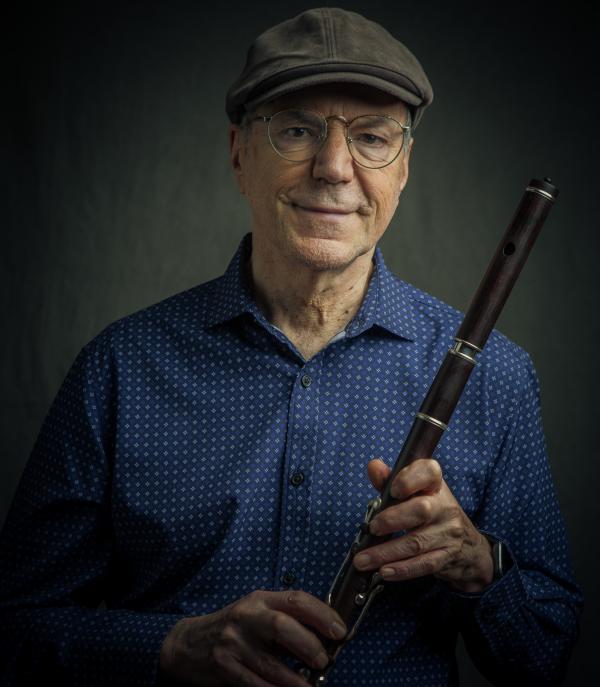
Patrick Olwell, Flutemaker (Athens, Georgia, and Nellysford, Virginia)
Central to Irish traditional music is the sound of the wooden flute—an instrument Patrick Olwell has helped revive and redefine. Drawing on historic designs and decades of study and craftsmanship, his flutes have set the standard for today’s makers and players.
(Photo credit: Christopher Bickford)
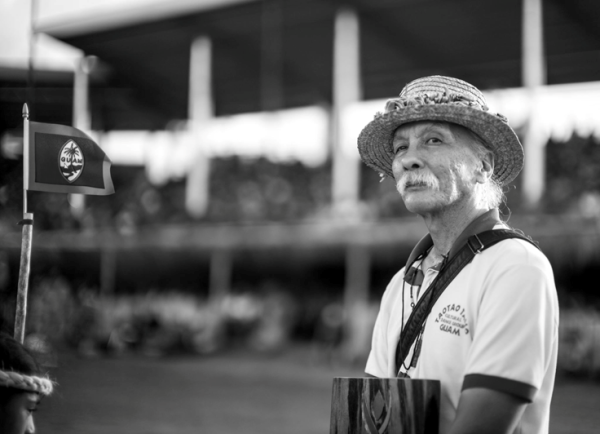
Frank Rabon, CHamoru Dancer & Choreographer (Hagåtña, Guam)
For more than four decades, Native Pacific Islander Frank Rabon has led efforts to restore and sustain CHamoru dance, an Indigenous tradition of Guam and the greater Mariana Islands. His work continues to pass on the history, language, and cultural knowledge of the CHamoru people.
(Photo credit: Manny Crisostomo)
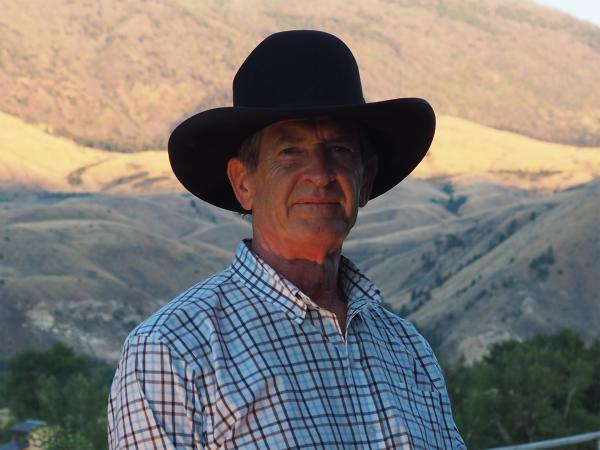
Cary Schwarz, Saddlemaker & Leather Artist (Salmon, Idaho)
Working at the intersection of function and design, Cary Schwarz creates custom saddles known for their strength, balance, and craftsmanship. His nearly five decades of work have helped sustain and advance the traditions of the American West.
(Photo credit: Chris Dickinson)
NEA National Heritage Fellowship recipients are nominated by the public—often by members of their own communities—and then judged by a panel of experts in the folk and traditional arts. The panel’s recommendations are reviewed by the National Council on the Arts, which sends its recommendations to the NEA chairman.
On March 24, AFS hosted a special information session with NEA detailing their updated nomination process. The recording includes Spanish and ASL interpretation. The webinar recording will be available in the coming weeks on the AFS Community Hub and the FAP PDI Resource Hub.
We sometimes make mistakes, and we are happy to correct any errors that you may come across on our site. If you find an error, please let us know using the “submit a correction” link.