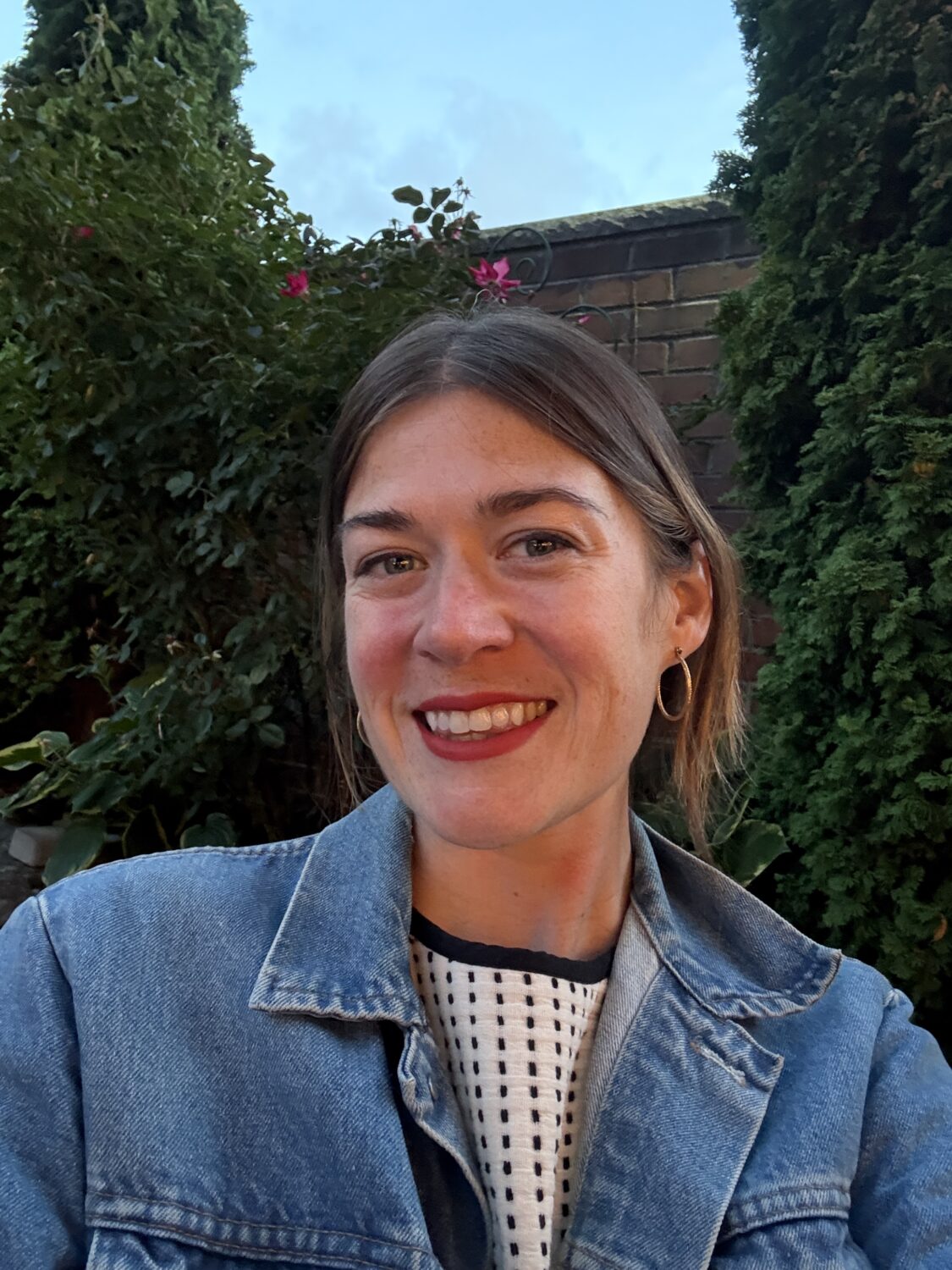
Sarah Craycraft is Head Tutor and Lecturer of Folklore and Mythology at Harvard University. Her forthcoming first book, The Village Project: Rural Revitalization in Contemporary Bulgaria (accepted with University of Wisconsin Press, expected June 2026) explores the practices and stakes of intergenerational approaches to “rural revitalization” in Bulgaria’s rapidly depopulating villages. Her broader work and publications address genre, the circulation of value and meaning, and the role of youth in tradition, cultural transmission, and strategies of recuperation. Prior to joining Harvard, Sarah was Visiting Assistant Professor of Folklore at Indiana University and Lecturer of Comparative Studies at Ohio State University. She has served in leadership and advisory roles for the Slavic, East European, and Eurasian Folklore Association, the International Connections Committee of the Appalachian Studies Association, and Midwest Folklorists and Cultural Workers Alliance. Sarah’s service, outreach, teaching, art, and community engaged scholarship aims to build bridges between academic and public folklore, spaces of formal and informal learning, and fields adjacent to folklore studies. Sarah earned her PhD from Ohio State University.
Statement of Candidacy:
Paralleling my graduate training in folklore studies, I actively participated in club ultimate frisbee. As a result, I have always thought of ultimate frisbee players a bit like I think of folklorists. While my studies prepared me to document, analyze, and present the nuances of tradition to broad publics, my frisbee training taught me a thing or two about teamwork. (for those rolling their eyes, I receive your chuckles and groans with warm gratitude and a mildly sheepish shrug). Frisbee taught me to recognize the qualities of a team that endures. These teams are not necessarily star studded or flashy. They are often, dare I say, humble. Solid frisbee programs are those that think and act not only in the present, but toward the future. These teams train and plan for mental toughness, which, yes, requires rigorous training, a dedication to timely performance, and noteworthy skill, but they are also built through something more. Enduring programs are more than resilient; they are built through mutual care, trust-based relationships, deep listening, and awareness of the role each individual plays in the success of the whole. Mentally tough, forward-thinking teams learn from losses and are not reactive and impatient, but rather are forward-thinking, creative, strategic, and sometimes even boring in their gameplay. They know what they stand for and they stick to it with courage. They emphasize perfecting the basics from the top stars on the roster to the newly-acquired, gangly-legged foals who have never touched a frisbee in their lives. They are not always the most well-resourced group of athletes but make much with what they have to outwit and outperform. My vision for AFS leadership is a team of leaders equipped to build an AFS (and a field) that endures the challenges of the present—consolidation and program cuts, threats to funding, violence against our must vulnerable collaborators, and an increasingly hostile discursive environment—in service of our commitment to excellent programming, documentation, scholarship, advocacy, teaching, and interpretation. If selected for the nominating committee, I would approach the task of selecting this team through deep listening and conversation with current and past leaders, our elders, and our most vulnerable teammates (our adjunct faculty, our contract fieldworkers, our student members, our community partners) to understand what this team needs and what kind(s) of futures we envision for our field, our work, and our world. I believe excellent folklore leadership is attentive to succession planning, to changing and challenging dialogues about and from the communities we ally ourselves to, and—especially in this moment—to finding the balance between strategic, courageous risk for and patient protection of our mission.