Atlanta Re-storied: The Atlanta Annual Meeting, Past and Present

The American Folklore Society held its 137th Annual Meeting from Oct. 18-21 in Atlanta, Georgia, followed by the virtual component Nov. 12-14. Combined, the two parts of the meeting brought together almost 900 attendees, approximately 600 of whom were presenters. The in-person part of the meeting marked a return to Atlanta after 20 years, with commemorative stickers based on the 2005 t-shirt design to celebrate that return.
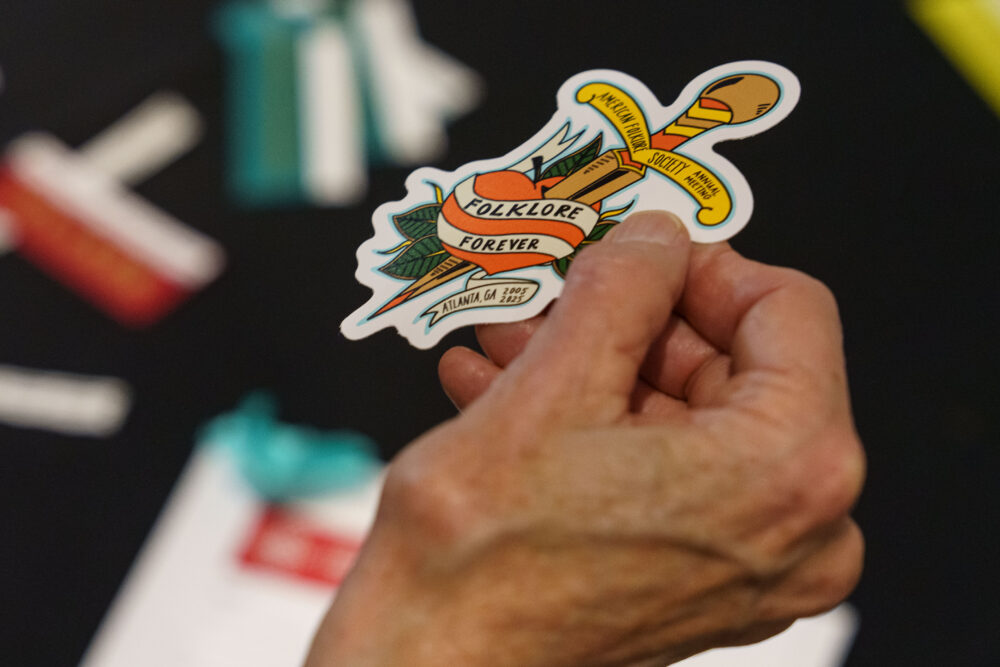
In addition to the usual selection of panels, forums, plenaries, and the 20th anniversary of our last meeting in Atlanta, a few other anniversaries tied to folklore scholarship and practices were acknowledged during the conference days held in Atlanta. 2025 was the 100th anniversary of the John C. Campbell Folk School, located in Brasstown, North Carolina, not far from Atlanta. The meeting included both a pre-organized panel about the Campbell Folk School and a day-long pre-conference excursion to the Campbell Folk School, events organized independently by several AFS members.
Celebrations of another anniversary spanned both the Atlanta and virtual sessions of the meeting with eight panels sharing research–and songs–touching on the breadth of study in the 200 years since the work of Francis James Child was originally published. Almost 40 scholars, from Great Britain, North America, and Western Europe, participated in these sessions, orchestrated by the Music and Song Section.
Restoring and ReStorying: Missing Stories and Moving Forward, the 2025 theme, drew submissions from folklorists and folklore adjacent scholars and practitioners. The Local Organizing Committee, chaired by Constance Bailey (Georgia State University), developed the theme and, along with other AFS members, worked on the review of proposals that generated a wide range of presentations. Many of those presentations explored stories and narratives that had been or are in the process of being reclaimed and reshaped. Among those was work on stories told through innovative forms. Media presentations offered attendees ways to re-envision and understand the past as well as to reconsider and reenvision the future.
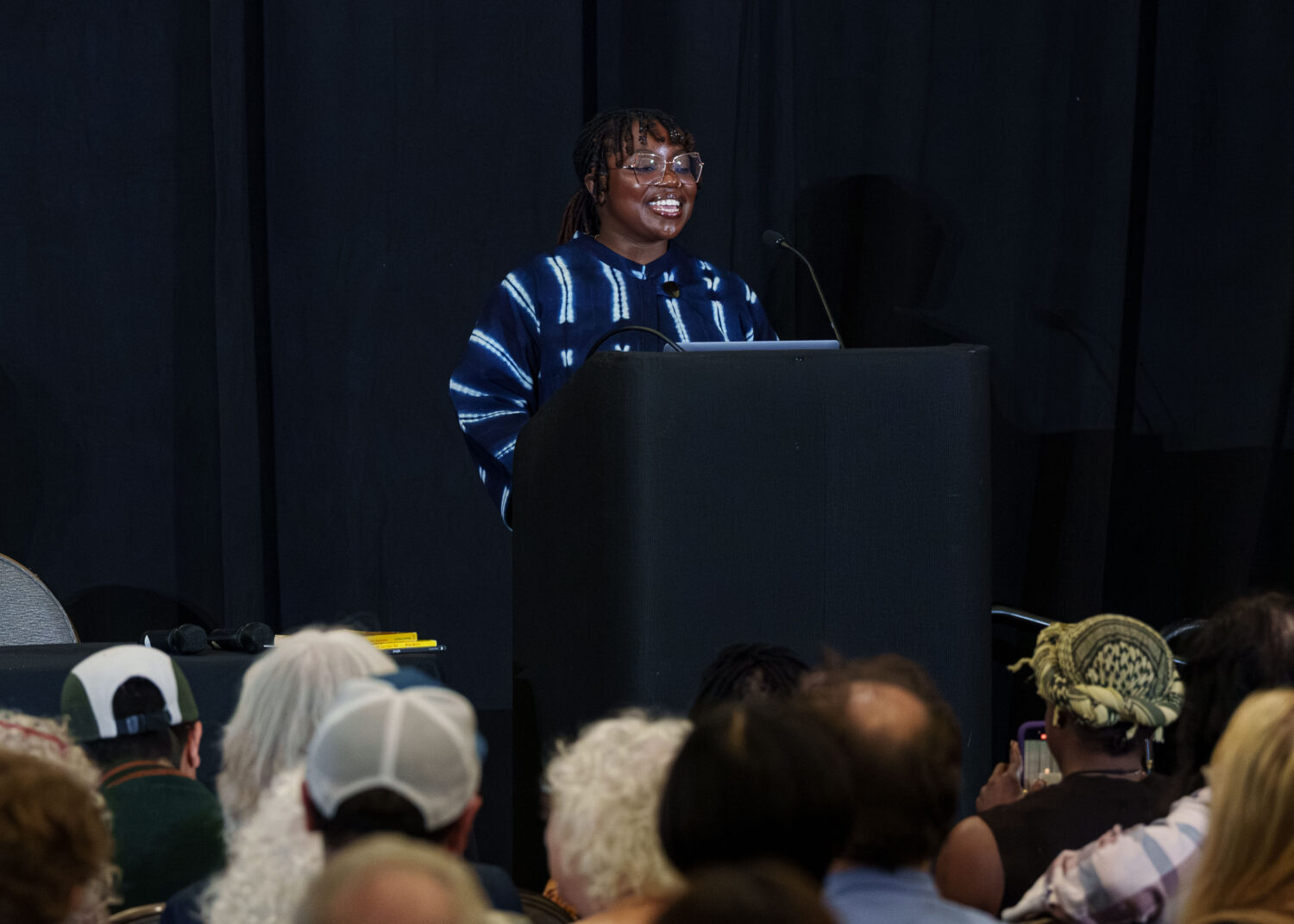
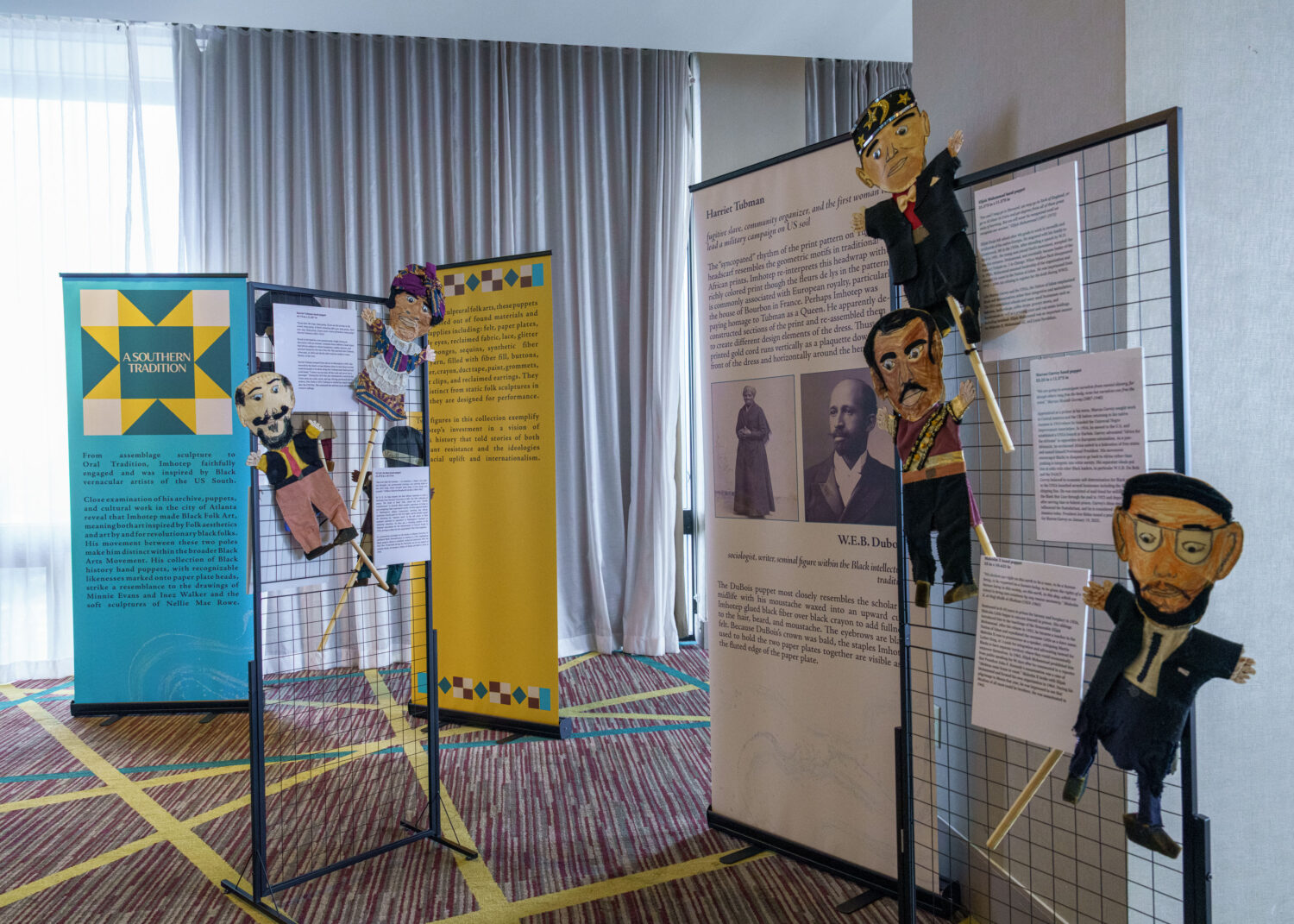
Along with the overall focus and structure of the meeting provided by the Local Organizing Committee, the Atlanta members of the committee shared “their Atlanta” with attendees. TJ Smith organized a foodways tour focused on immigrant communities in and around the city, and Paulette Richards’ contributions integrated a subtheme of stories told through material culture. A scholar who also works as a puppetry artist and volunteers with the Center for Puppetry Arts, she not only led two tours of the museum, but connected AFS with a remarkable Keynote for our opening night, and an exhibit of the vibrant and imaginative ways of storytelling done by Akbar Imhotep, the father of Ra Malika Imhotep, the keynote speaker. The virtual days of the meeting also incorporated discussion of puppetry, with a roundtable put together by Paulette Richards and Meltem Turköz, including participants from Turkey, the UK, and the U.S..
The first day of the meeting included a day-long workshop created and led by Local Learning and Sponsored by the Folklore and Education Section. At the workshop, Local Learning’s Teaching with Primary Sources team shared teaching tools and materials that allow for conversation among digitized sources from the American Folklife Center of the Library of Congress and local and regional archival collections.
The meeting featured two hallmark, plenary events of AFS meetings: the Fellows Utley Lecture and the Presidential Plenary. Each looked forward from the intersection of shifting cultural changes but considered the changes in different ways. The Fellows sponsored a roundtable featuring a group of scholars in discussion of “The State of the Field – Folklore in Higher Education.” Outgoing President Amy Skillman’s talk examined similar territory from her stance looking out onto the sea of current events. In “‘You Gotta Go with Your Gut:’ Navigating Risk and Fear in the Storm” she posited how tough times often rock the foundations of our ideas and practices, but they challenge us “to balance risk with safety” as we navigate our way forward.
Drawing in thinkers and practitioners new to the Annual Meeting with backgrounds in folklore as well as related disciplines, the borders of AFS and the field seemed fluid, expanding to allow new voices and invite in scholars and practitioners from folklore-adjacent disciplines. Rooted in popular education and critical pedagogy,“ The Power of Perspective: Generations of Evaluators Generating Change” exhibit highlighted the suppression of critical voices in the field of evaluation and connects participants’ lives to a lineage of resistance within the field. Learn more about The Power of Perspective on the May 13 Group podcast.


AFS celebrated a move toward more formal collaboration with the Oral History Association (OHA) by co-coordinating “Feed Your Stories,” a joint block party that took place on overlapping conference dates at Atlanta’s Project South Institute for the Elimination of Poverty and Genocide. The collaboration between the two will continue in 2027 when AFS will co-host with OHA a joint meeting in Chicago, IL.
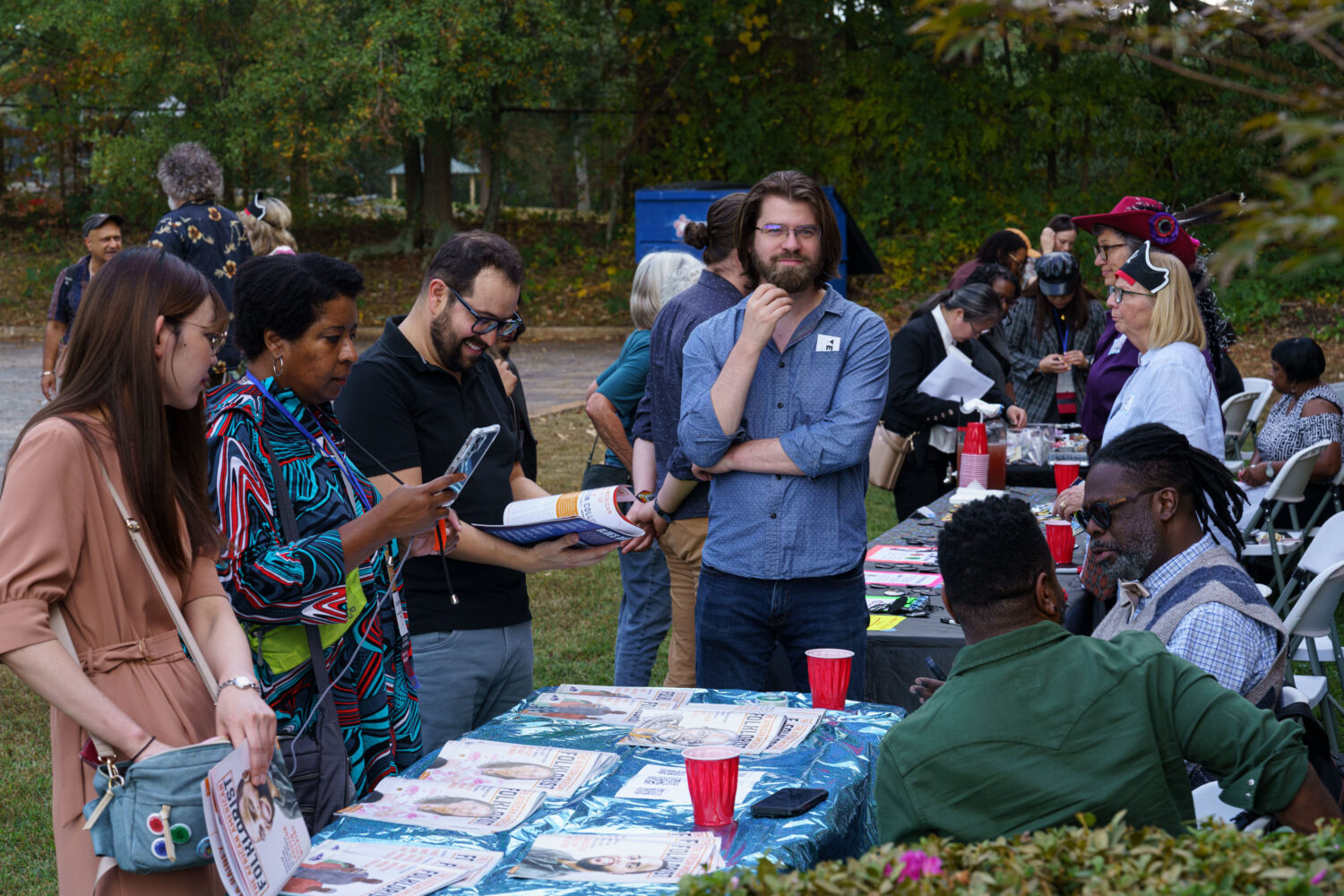
Many thanks to the meeting Sponsors, Local Organizing Committee, and Proposal Review Committee for their support in getting the meeting off the ground, and for the members, artists and exhibitors, Section Conveners, tech support, and volunteers who brought their ideas, passions, energy, and curiosity to the 2025 Meeting.


Stay tuned to the AFS website and keep abreast of the news shared in the newsletter for more information about the theme and proposal submission process for the 2026 meeting in Asheville, NC.
We sometimes make mistakes, and we are happy to correct any errors that you may come across on our site. If you find an error, please let us know using the “submit a correction” link.