Painting Thangkas on the Tibetan Plateau: Buddhist Art Making in Transition by Xue Ming
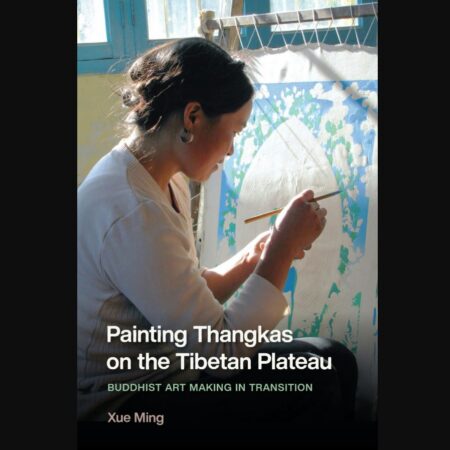
In Painting Thangkas on the Tibetan Plateau (University of Washington Press, 2025), Xue Ming looks into the lives of Rebgong thangka painters, whose sacred art is at once devotional, commercial, and political. Rebgong, a major center of thangka painting since at least the eighteenth century, has long been a site of artistic and religious significance. But in contemporary China, thangkas exist within multiple, sometimes conflicting, markets. Tibetan communities near and far continue to commission these intricate paintings for ritual use, while the Chinese state promotes them as folk art and a national heritage commodity. At the same time, a growing number of non-Tibetan patrons seek thangkas for their religious efficacy—the very quality often elided in official narratives.
Bringing together over a decade of ethnographic research, Xue illuminates the complex intersections of artistic tradition, state narratives, and shifting economies Rebgong artists must negotiate. She gives particular attention to female thangka painters, who were only allowed to paint beginning in the twenty-first century, and who continue to face cultural and market constraints unique to their gender. The book challenges assumptions about commodification, showing that rather than diminishing the religious value of thangkas, the market can serve as a platform for painters to assert their faith, preserve their cultural traditions, and establish their artistic authority.
Xue Ming is a research associate in the division of anthropology at American Museum of Natural History. Painting Thangkas on the Tibetan Plateau is part of the Studies on Ethnic Groups in China series published by University of Washington Press.
We sometimes make mistakes, and we are happy to correct any errors that you may come across on our site. If you find an error, please let us know using the “submit a correction” link.